1
Mature brown-husk collection
Mature coconut husks are collected and sorted. Brown husks are the starting material for the strong, resilient coir fibre commonly supplied in industrial bales.
120 kg coir fibre bale process
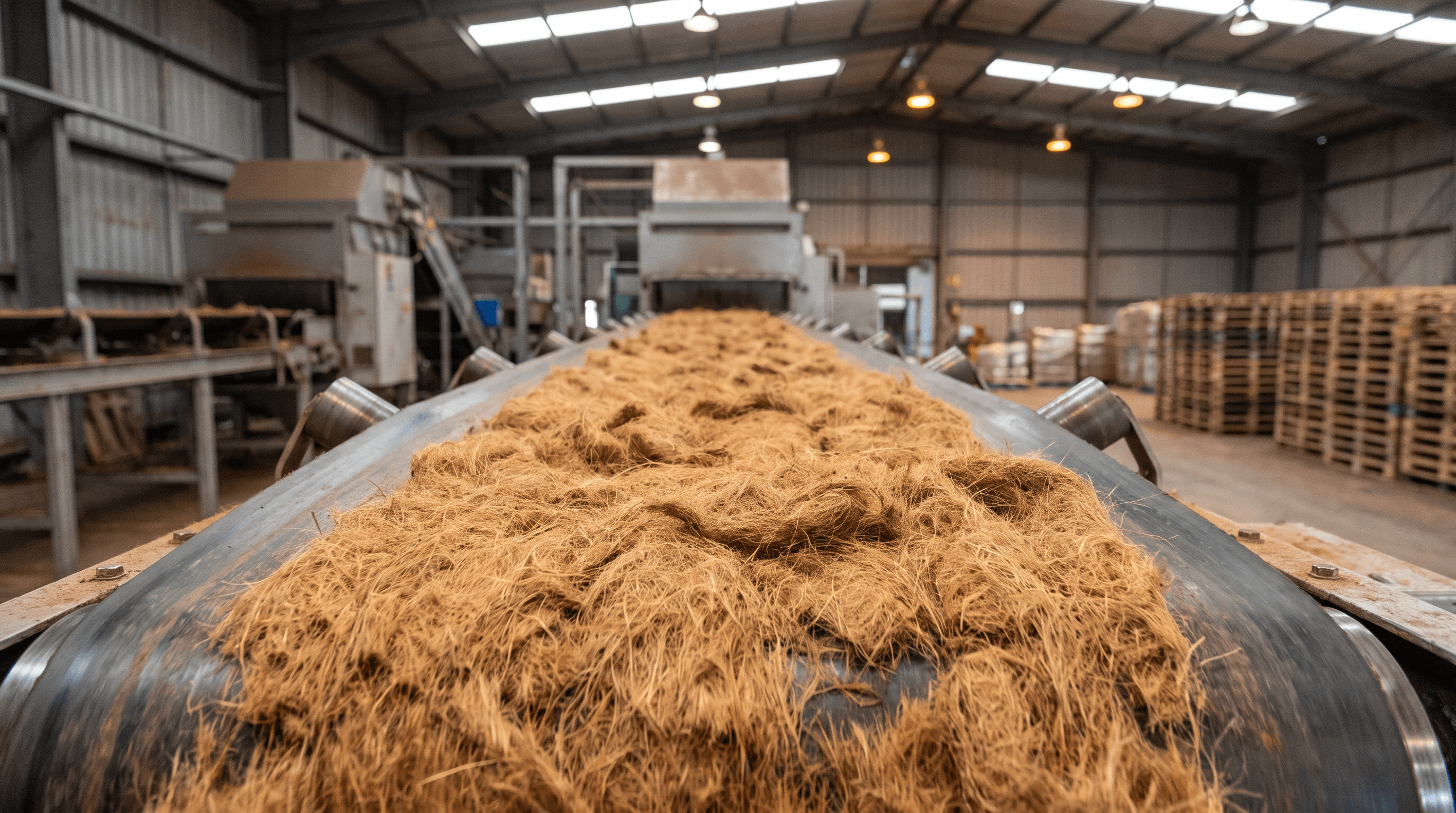
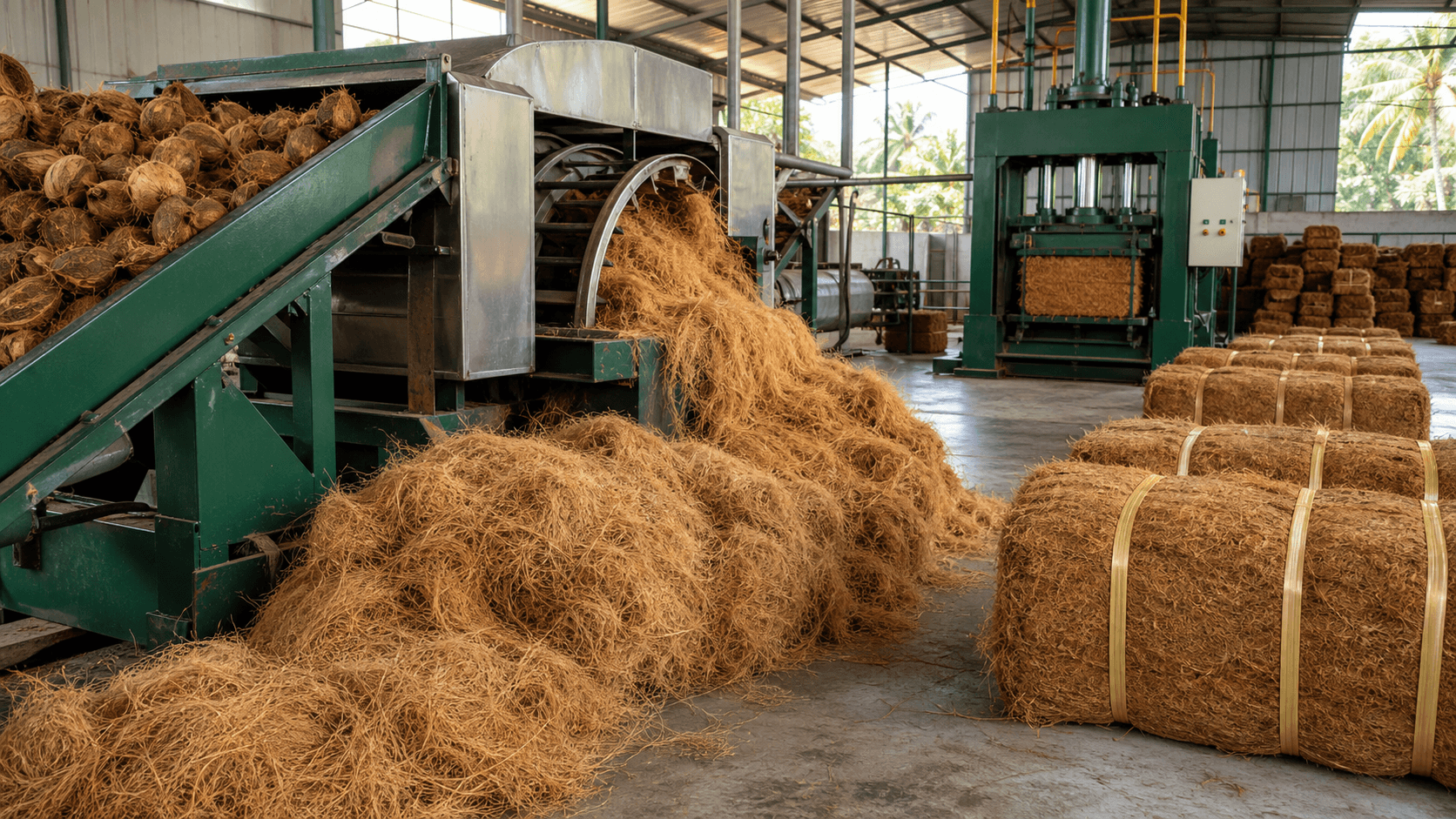
This workflow extracts the fibre from the husk, separates it from pith and unwanted material, dries it, and hydraulically compresses it into a transport-efficient 120 kg bale.
Request product detailsStep by step
Mature coconut husks are collected and sorted. Brown husks are the starting material for the strong, resilient coir fibre commonly supplied in industrial bales.
The selected husks are conditioned with water to soften the tissues that bind the fibre. The conditioning time depends on the extraction method used by the production unit.
A breaker and defibering or decorticating equipment open the husk. Revolving drums separate the coir fibre from short woody material and coir pith.
The extracted fibre is sifted and cleaned to remove loose pith, dirt and unwanted particles, then dried before baling. Fibre quality and cleanliness are checked at this stage.
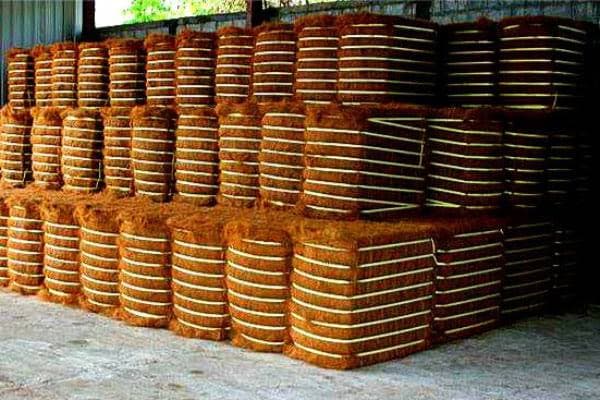
Dry, approved fibre is loaded into a hydraulic baling press, compacted to the 120 kg bulk format, securely strapped, and released from the press for handling.
Each finished bale is checked for weight, compression, strapping and visible condition. Approved bales are stacked and prepared according to the confirmed shipment quantity.
Quality checked